I Created a Company Because No One is Hiring Developers
May 5, 2025
Introduction
Just last year, in 2024, I graduated from the University of Utah with my Bachelor's in Computer Science. Honestly? Throughout my four years of study, from 2020 to 2024, I had a crystal-clear picture in my head: walk across that stage, grab my diploma, and life would just... fall into place. I figured I'd land a great software engineering job, maybe at a dream company like Adobe, and start living my best life. Simple, right?
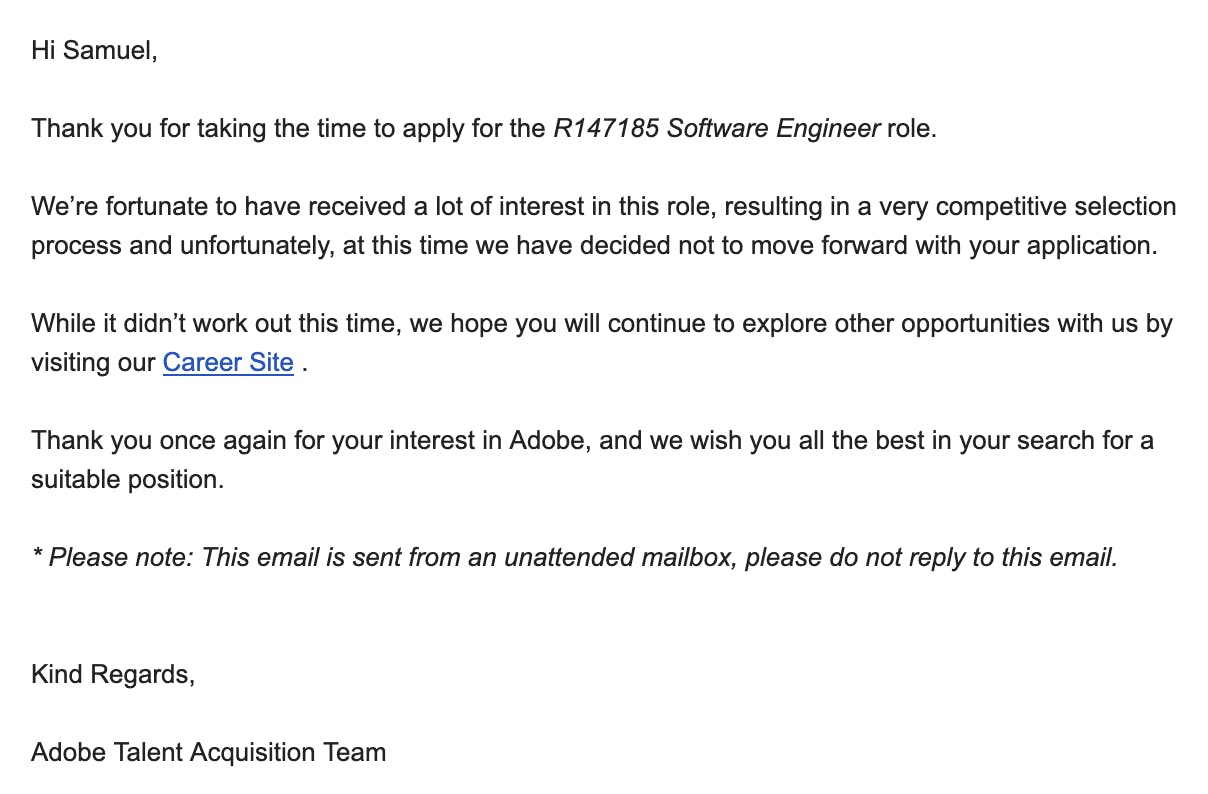
Well... reality had a slightly different plan. As you probably guessed from the title of this article, 'smooth sailing' wasn't exactly how things went down when it came to finding that dream job. So today I want to share the why and how behind my decision to take things into my own hands – creating a company and a vision that I'm truly passionate about and committed to.
A Quick Guide to Some Tech Terms
Domain Name: Think of this as the address of a website on the internet (e.g., safewithapollo.com).
DNS (Domain Name System) Filtering: A technique used to block access to specific websites by preventing your computer from finding their internet address. When you type a website name, DNS translates it to an IP address (like a phone number for the internet); DNS filtering stops this translation for blocked sites.
VPN (Virtual Private Network): A service that creates a secure, encrypted connection (a "tunnel") between your device and the internet. This protects your online activity from being seen by others and can make it appear as if you're browsing from a different location.
Front-end Development: Building the parts of a website or app that users directly see and interact with – the layout, design, buttons, etc.
API (Application Programming Interface): A set of rules and protocols that allow different software applications to communicate and exchange information with each other. It's like a waiter in a restaurant that takes your order (request) to the kitchen (another system) and brings back your food (response).
Database: An organized collection of data where information like user accounts, website content, etc., is kept.
The Vision
The first step for any project is figuring out what you want to make and if anyone actually needs it. This step can be incredibly difficult and time-consuming, but for me, it boiled down to asking four simple questions: What's the problem? Why do I care? What are my limitations? And what can I do with that passion in order to build something that helps people?
What is the problem?
There's a real and ever-growing problem in the world. Consider this:
- It directly affects an estimated 114 million men (69%) and 68 million women (40%) in the US alone. - Addiction Help statistics
- It indirectly affects everyone.
- 93% of boys and 62% of girls are exposed to it by age 15. - Addiction Help statistics
- It's market is valued at over $76 billion. - Research and Markets
- It roughly doubles the probability of divorce if one spouse uses it for the first time after being married. - Pubmed
- It is tragically linked to suicide. - Pubmed
- Some experts say its effects on the brain can be comparable to highly addictive substances. -Surg Neurol Int.
This problem... pornography.
Why I care and why you should too
Because this isn't just an abstract issue for me; it's something that has personally touched my life and the lives of people I know. I understand the shame and isolation it fosters, feelings that made me keep it a secret and prevented me from reaching out for help or guidance. I suffered in silence, which, as it so often does, only allowed the problem to persist.
And here’s a truth that connects my experience to so many others: for many, this struggle begins not from a place of malice, but with genuine curiosity. My 11-year-old self, exploring the internet, couldn't possibly have grasped the long-term consequences. Today, with the internet more accessible than ever, especially to kids navigating puberty, resisting that initial curiosity can be almost impossible. From that first exposure, it can quietly escalate into a lifelong battle. This journey from innocent exploration to silent suffering underscores why we should all care. But here’s the crucial part: I was able to overcome it, and I truly believe that with the right understanding and support, anyone can find their way out.
What are my limitations?
- Money: I'm a solo founder with zero funding. Plainly stated: I'm broke (a common side effect of those job rejections).
- Experience: As a new grad, I lack industry experience. My degree felt more like theoretical math sometimes, so I've had to teach myself the modern technologies companies actually use.
- Shiny Object Syndrome: I love starting new projects. I'll admit, I can get bored working on the same thing for too long, and my mind starts thinking of the next big idea.
- Time: Not having a full-time job helps, but time is still finite. I can't do everything at once.
What can I do?
How do I tackle this massive problem with these limitations? I need a plan that involves minimal overhead, lets me build experience, keeps me motivated, and uses my time effectively. My solution involves a few key pieces:
- Leverage free tiers from cloud providers to host a VPN server.
- Build AI into that VPN to filter out pornographic content automatically.
- Create a website and device native apps that offer recovery resources and connect users easily to the secure, filtered VPN.
This approach keeps costs low, but the trade-off is a massive investment of my own time for learning and development.
The Grind Begins
Actually, the grind began about a year ago, in May 2024, and it has definitely continued. So maybe this section should be called "The Grind Begins, Continues, and Probably Never Ends!" With that said, here's a brief outline of the progress and where the company stands today.
Branding
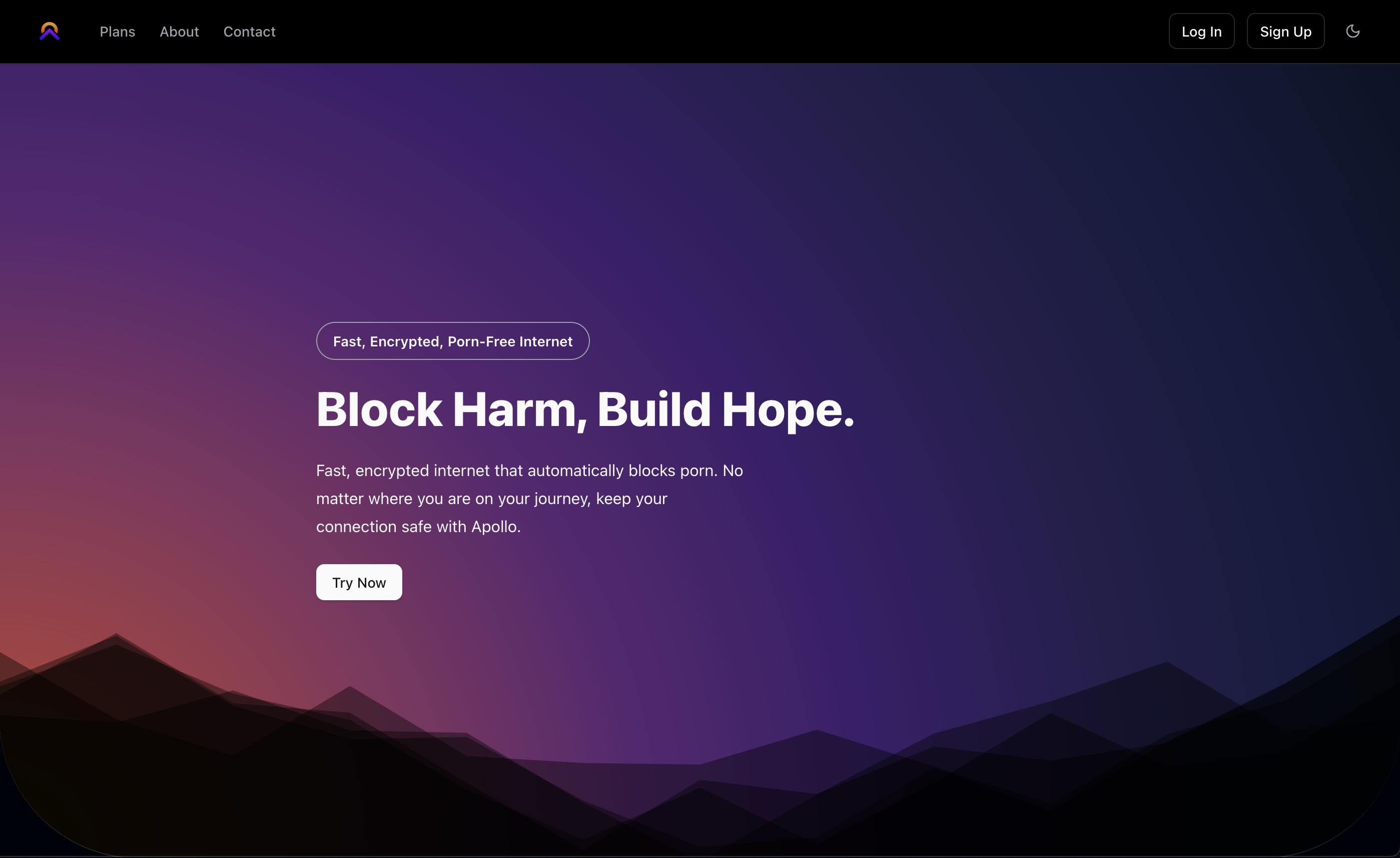
First things first: branding. I wanted the brand identity to be centered around hope and the journey of overcoming pornography. To me, there is nothing in nature more recognizably hopeful than a sunrise. For the journey I decided to use mountains because traveling across their ridges is never a straight line to the summit. It reflects the non-linear journey required to overcome this addiction. Combining both of these ideas, we have the general theme of the brand: a sunrise peaking over a mountain top. While creating this brand identity the name Apollo came to mind because he is the Greek God of the Sun and protector of youth. So with that, the company became Safe with Apollo.

Website
Next, I focused on building the website itself. First, I secured its online address: safewithapollo.com. I truly enjoy the creative process of designing what a website looks like and how users interact with it (front-end development). I used a popular set of tools called React to build these visual parts, and honestly, this was the most fun part of the project for me.
To make building the website even more efficient, I decided to used a React framework called Next.js. I chose Next.js because it has some great built-in features that helps the website run smoothly and quickly. For example, it seamlessly combines the 'client' (the parts of the website you see and interact with on your screen) with the 'server' (the powerful computers and logic working behind the scenes to deliver content and make the site functional). This tight integration makes building complex features simple and helps keep the website’s code organized and easy to manage as the site grows.
API and Database
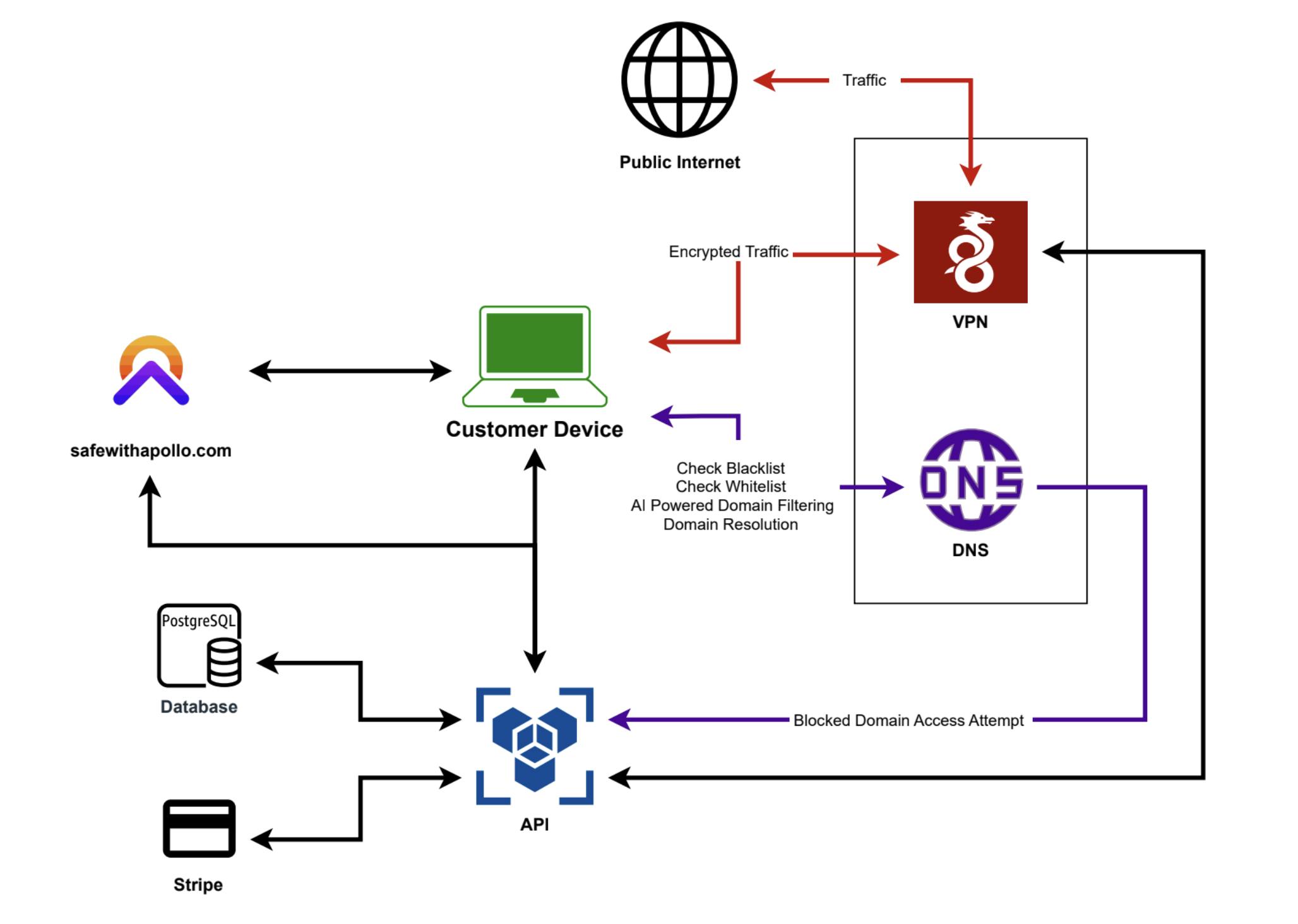
Then I needed somewhere to store information – user data, website content, VPN connection details, everything. A huge shout-out here to Professor Aaron Wood at the University of Utah for introducing me to FastAPI. If you haven't heard of it, it's a Python web framework that is incredibly easy to use and surprisingly fast. Using FastAPI, I integrated with Supabase for my authentication and my database needs.
My development process might be a bit uncommon, but it revolves almost entirely around the API. Whatever functionality I build into the API first can then be implemented across any client – the website, mobile apps, desktop apps. This API-first approach is crucial for maintaining a consistent experience on all devices and minimizing the time I spend adapting features for different platforms.
VPN Servers and Filtering
Then came the part I knew the least about: setting up the actual VPN servers to route user traffic and block harmful sites. This involved a steep learning curve, especially diving into network protocols and security best practices ("hardening"). My core goal here is simple: provide users with a fast, secure, private, and porn-free internet connection. To achieve the 'porn-free' aspect without deeply inspecting traffic (which would compromise privacy and speed), I focused on DNS filtering. This technique allows the server to block requests going to known harmful domains.
For the secure connection itself, I implemented the WireGuard tunnel protocol. It's widely considered industry-leading technology, known for its exceptional speed, modern security, and relative ease of use, ensuring the core VPN functionality is both robust and efficient. Importantly, this combination allows the filtering to act as an added layer of protection without breaking other common VPN uses, like accessing region-locked content or encrypting traffic on public Wi-Fi. It enhances safety without compromising core benefits.
Device Native Apps
Currently, connecting your device to our VPN servers involves a few steps: you create a device profile on our website, link it to a server, and then import that configuration into the standard WireGuard app on your phone or computer. While this method is versatile—allowing connections on many devices, even those we don't have a dedicated app for—I know it's not the most seamless user experience.
That's why my main focus right now is to develop dedicated, native apps for all major platforms. These apps will make connecting to Safe with Apollo much simpler. I'm excited to share that we already have early versions for iOS and macOS in testing! With these, you'll be able to connect and disconnect with just a tap or click, directly within the app.
Looking ahead, we plan to release native apps for Android, Windows, and potentially others, ensuring a smooth and intuitive experience across all your devices.
Safe with Apollo
So, that's where things stand today. It's been a wild year since graduation – definitely not the 'easy path' I envisioned, but perhaps something far more meaningful. Building Safe with Apollo from the ground up, fueled by late nights and countless hours of learning, has been incredibly challenging but also deeply rewarding. Our core mission is simple: to help everyone, no matter where you are on your journey – whether you've struggled in the past, are struggling now, or simply want secure and clean internet. The goal is that no matter where you are, you can keep your connection Safe with Apollo.
This mission is built on providing supportive tools, not forcing solutions. We believe that real effectiveness comes from your desire and choice to utilize them. Safe with Apollo is designed to be a resource you can turn to, and ultimately, it's only as effective as you desire it to be, because that's how lasting change takes place – through personal commitment.
The grind definitely continues – there's still so much to build and improve, but knowing the 'why' behind it all makes every step forward worthwhile.
Contact and Donations
If you're passionate about our mission and wish to lend your support, you can securely donate via PayPal at https://www.paypal.biz/safewithapollo. Your generosity makes a real difference.
For any inquiries, or if you'd like to get in touch, please don't hesitate to email me at SamBennettDev@gmail.com.